landscape & transhumance
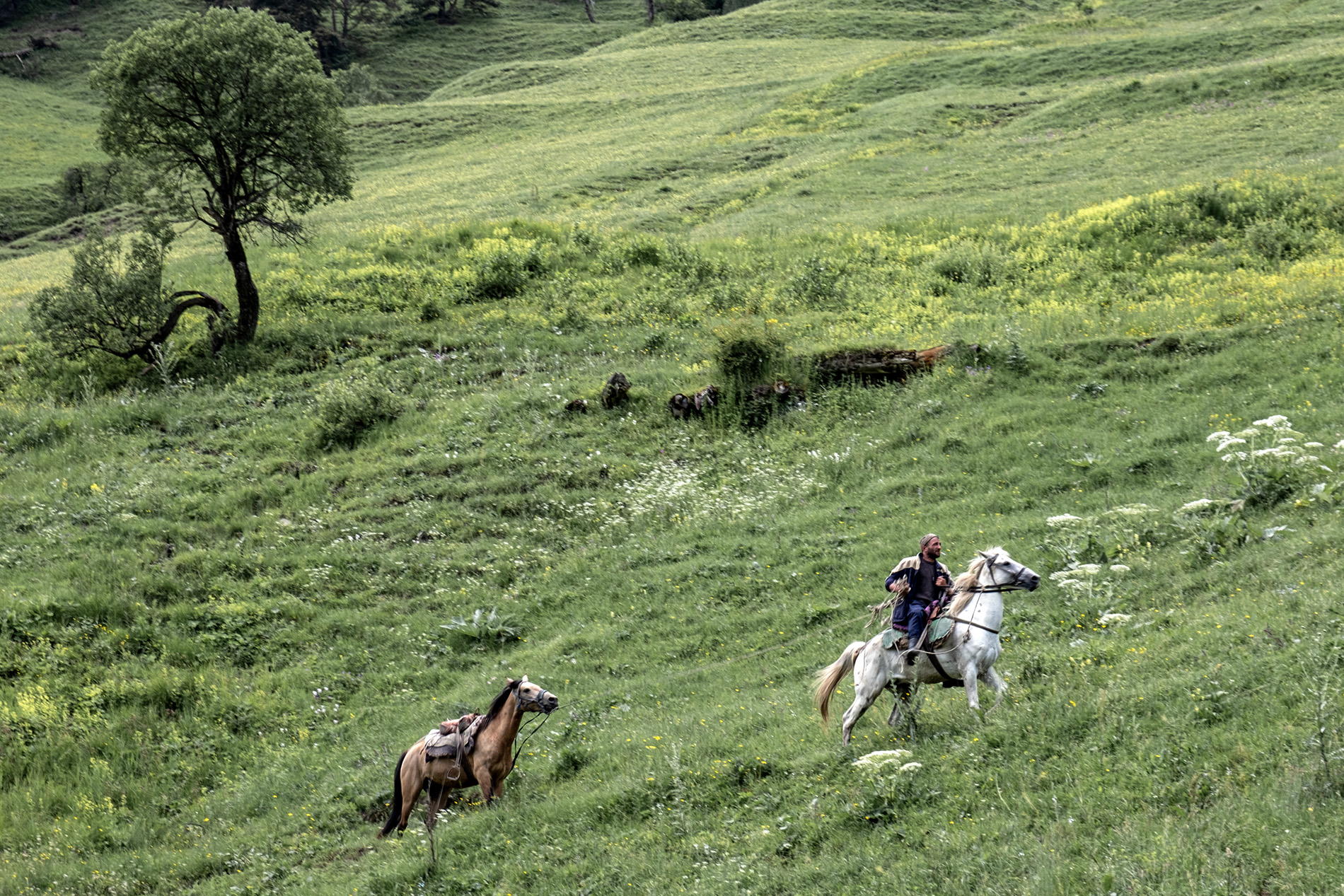
Horseman in Gomezari Tusheti

Shepherd’s camp near Diklo in Chagma Tusheti
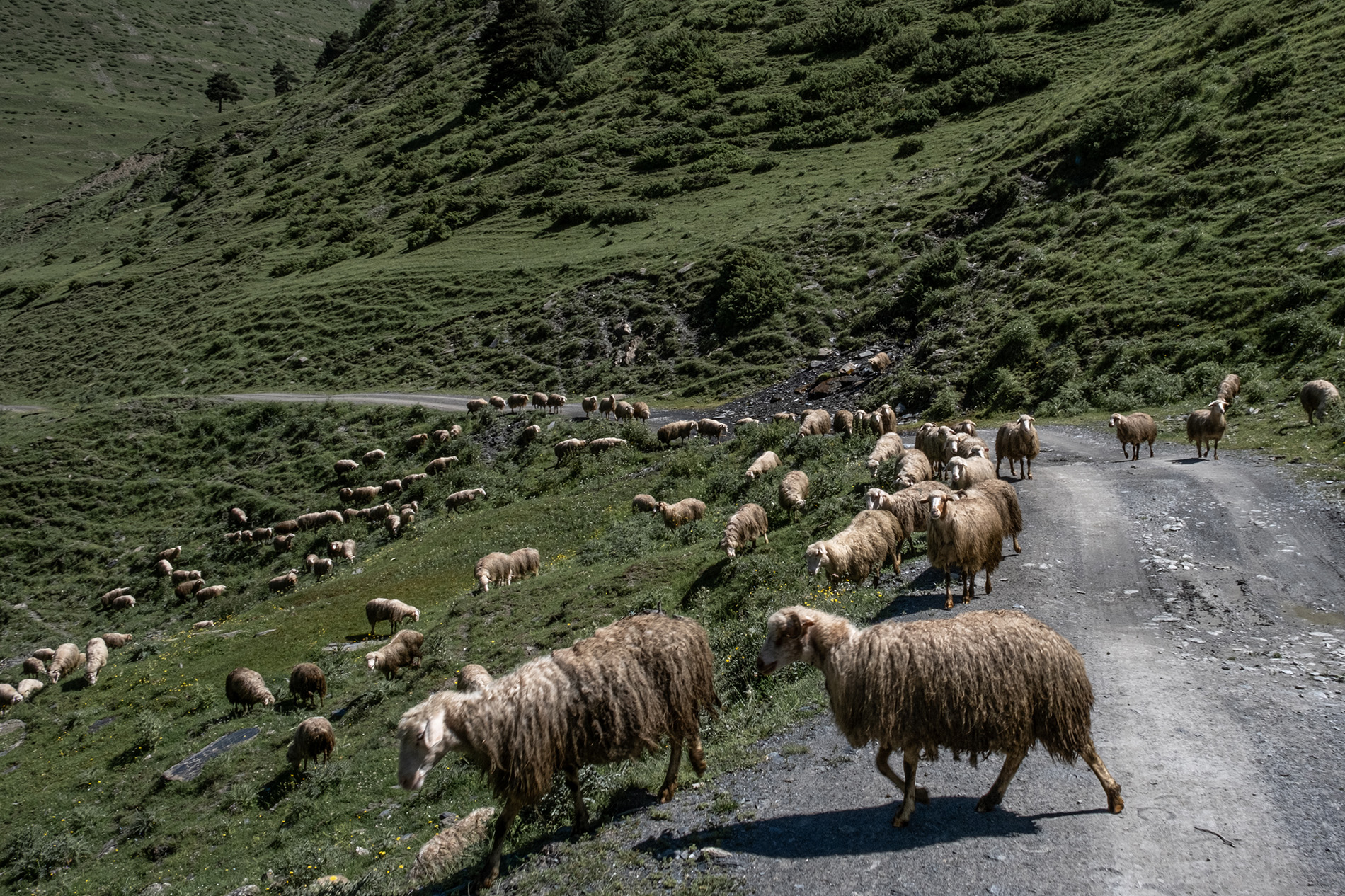
Flocks on the road near Dartlo (Pirikita Tusheti)
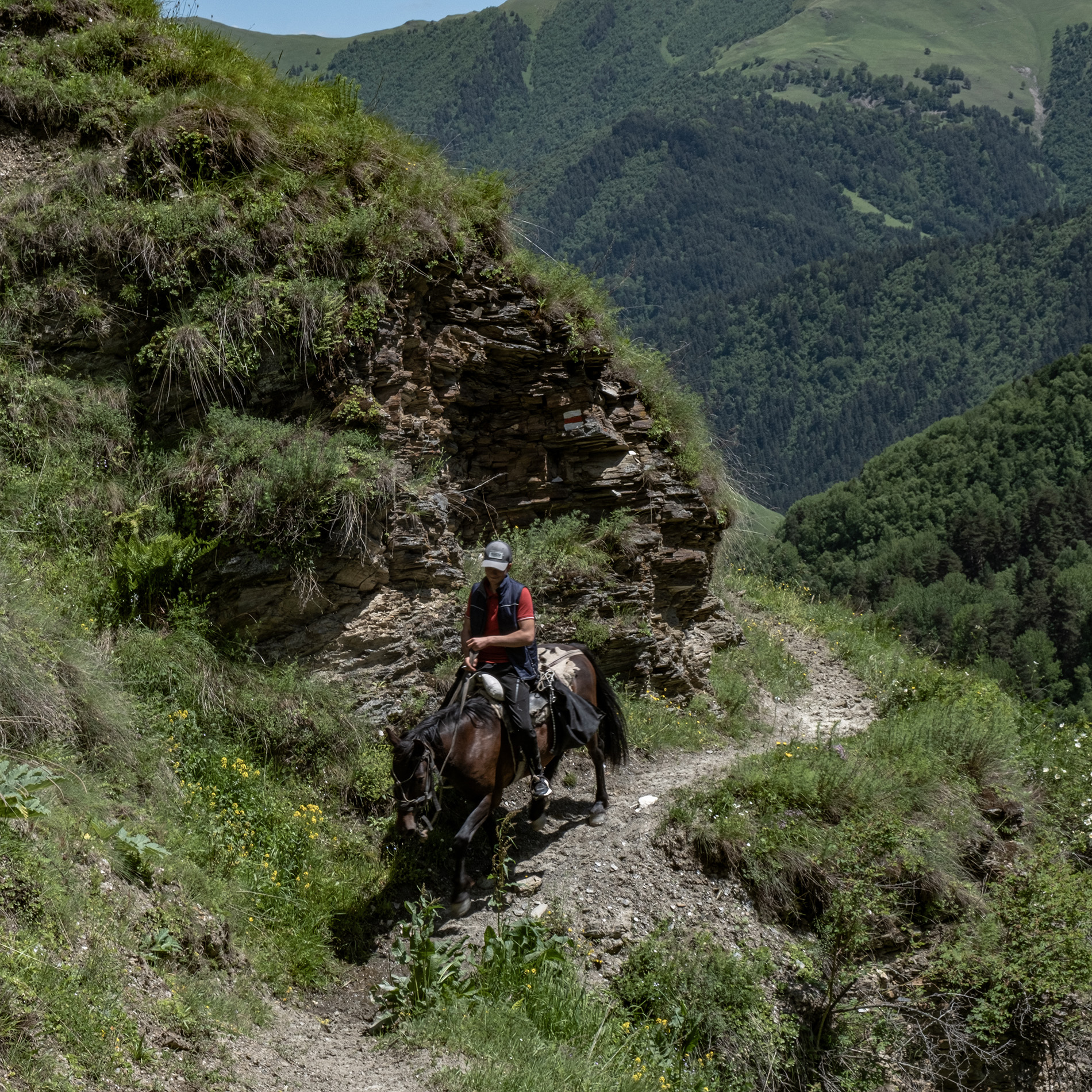
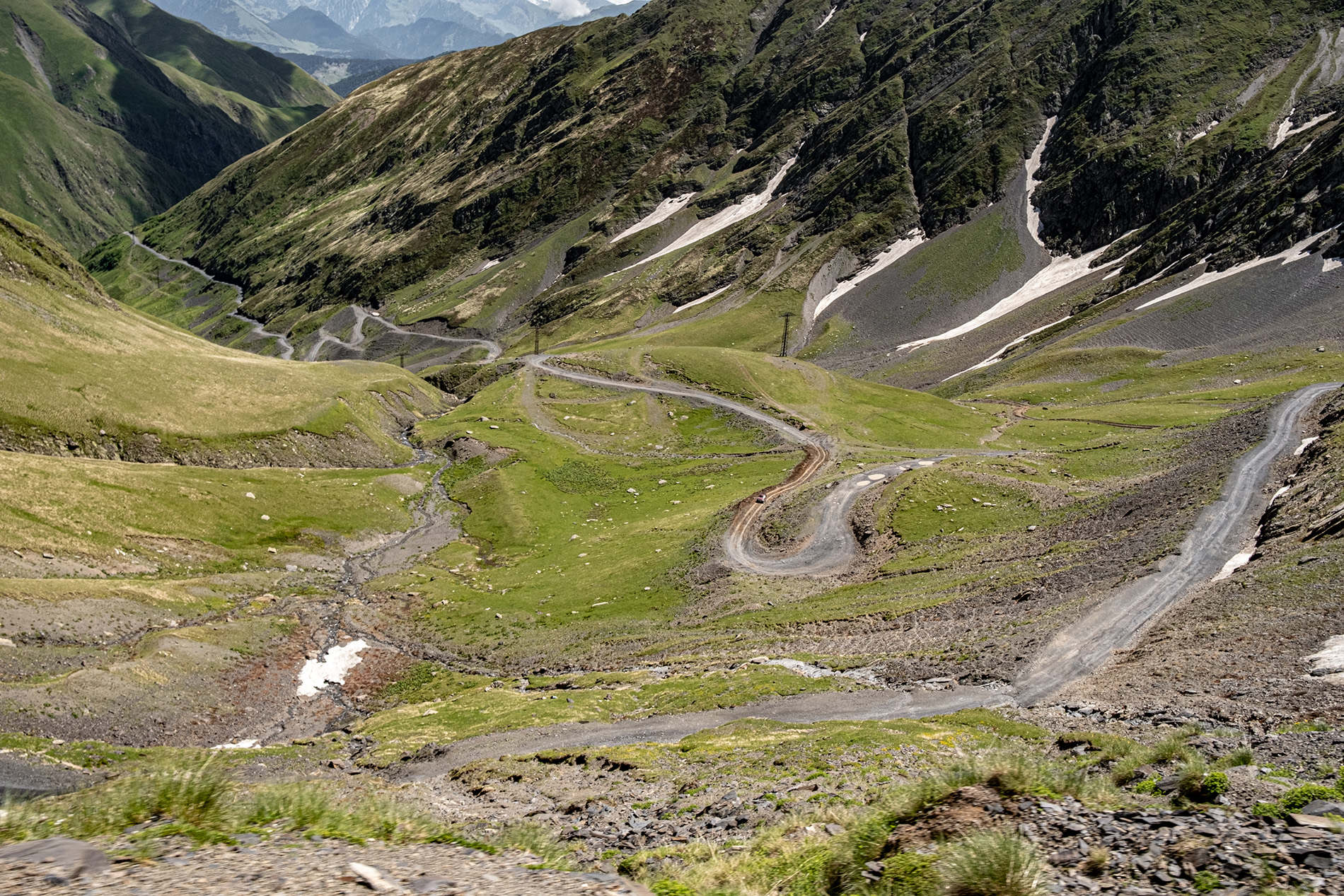
The name of the biosphere reserve, „Three Alasani Rivers“, is taken from the water basin where the Alazani River and the rivers of the same name running north of the watershed, the Tushetis Alazani and the Pirikitis Alazani, have their origin. The Alazani itself rises from the main southern ridge of the Great Caucasus and flows southeast through the Alazani Valley of Kakheti. The biosphere reserve has an extension of 199,944 ha. Nomadic sheep farming is the most important agricultural activity in Tusheti. It is based on the system of alternating summer and winter pastures, known as transhumance. The winter pastures in the Shiraki Valley of Dedoplistszqaro municipality cover 18,722 ha. The Tushetian mountain pastures are visited in summer. In this way, the shepherds use seasonal natural pastures for their sheep – alpine and sub-alpine pastures in summer (April to September) and steppe-climate pastures in winter (November to March).
Wool, as a natural animal resource that is renewed year after year, links the Tushetian winter pastures in the Georgian lowland province of Kakheti and the Tushetian highlands in many ways. The process of producing wool as a product resulting from the coexistence of animals and humans is linked to temporal and spatial stages, each of which entails special challenges: the herding of the animals, the transport of the wool, its cleaning and processing and finally its sale.
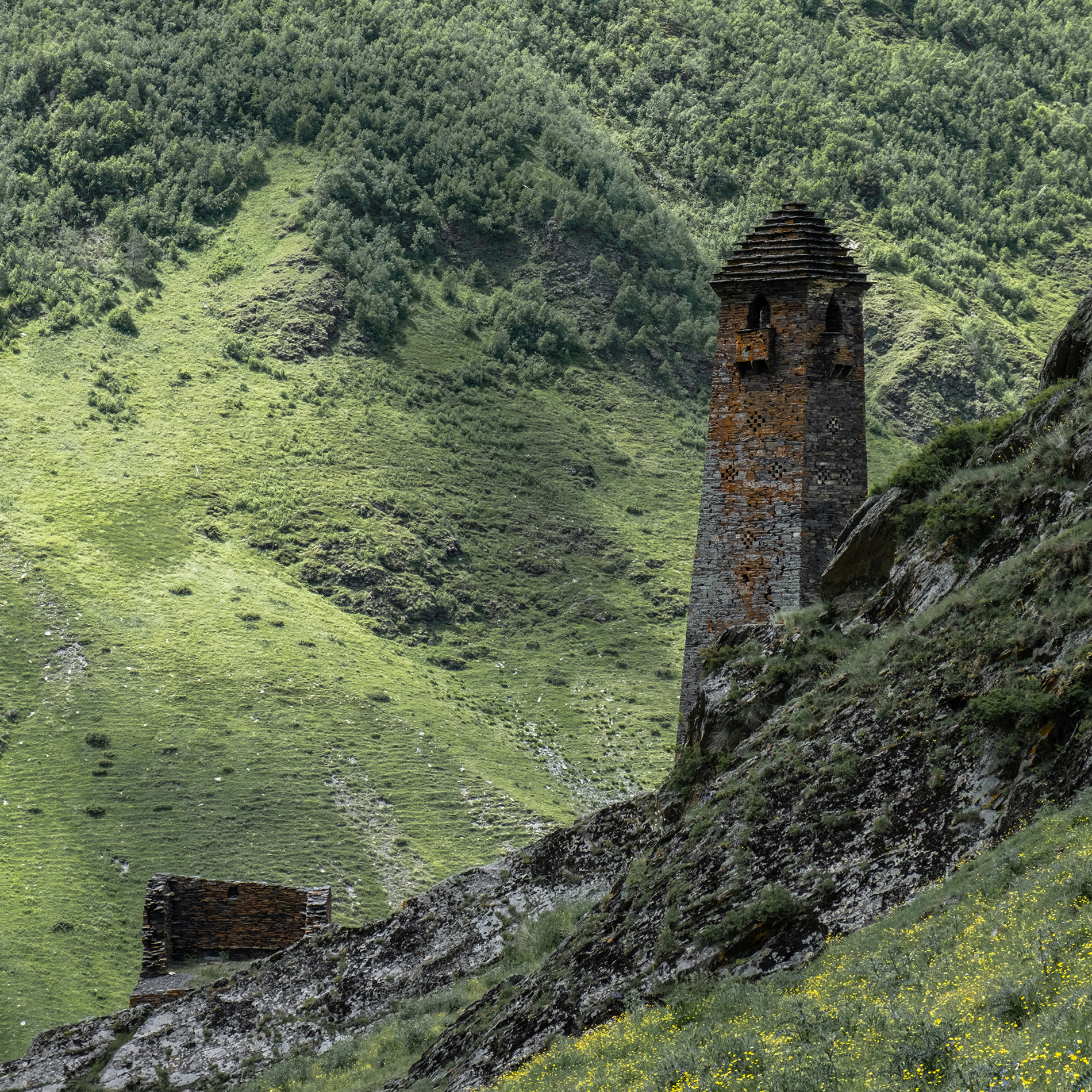
architecture
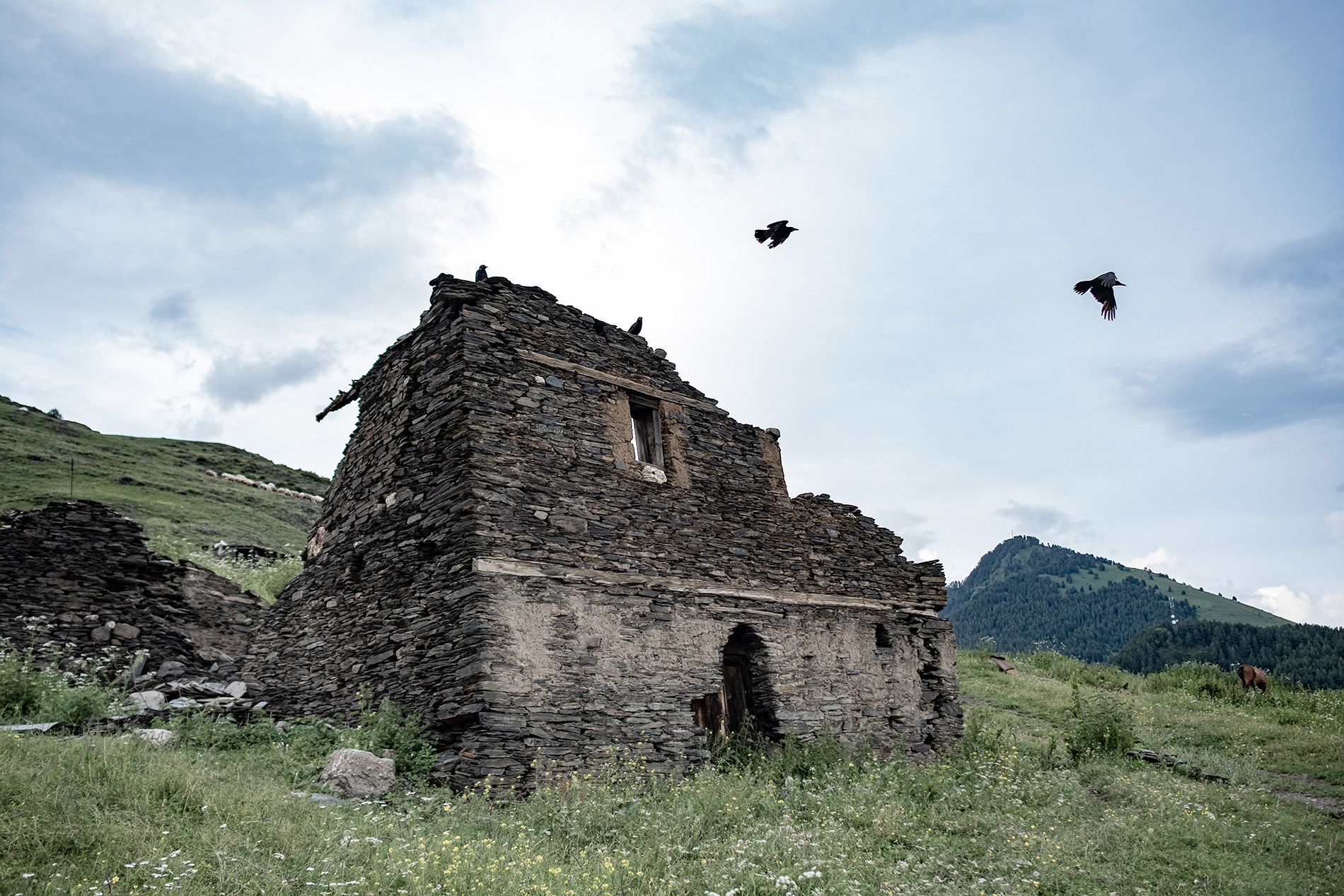
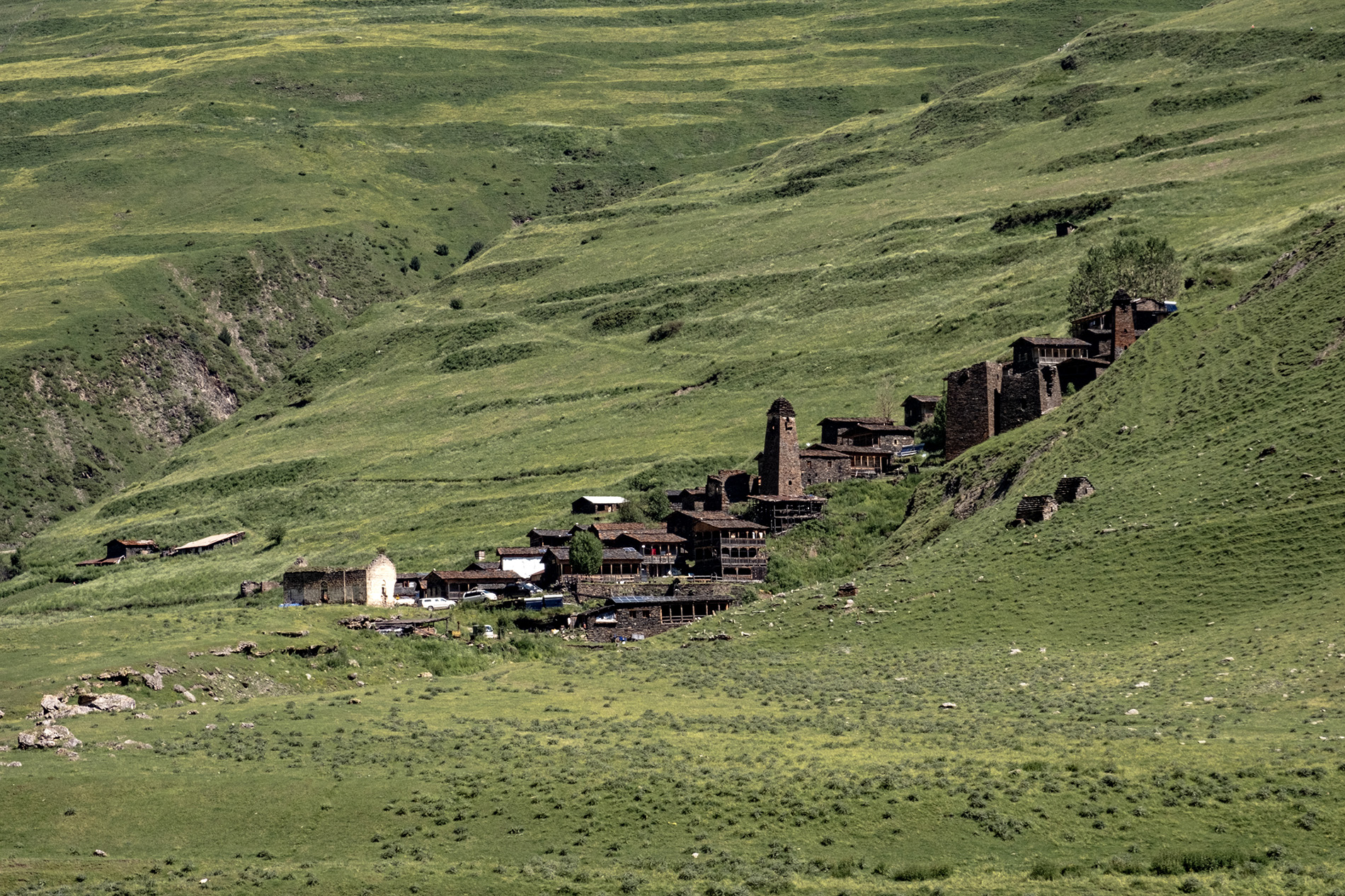
Dilapidated building of the transitional house type in Lower Omalo (Chagma Tusheti)

Barn house in Lower Omalo (Chagma Tusheti)
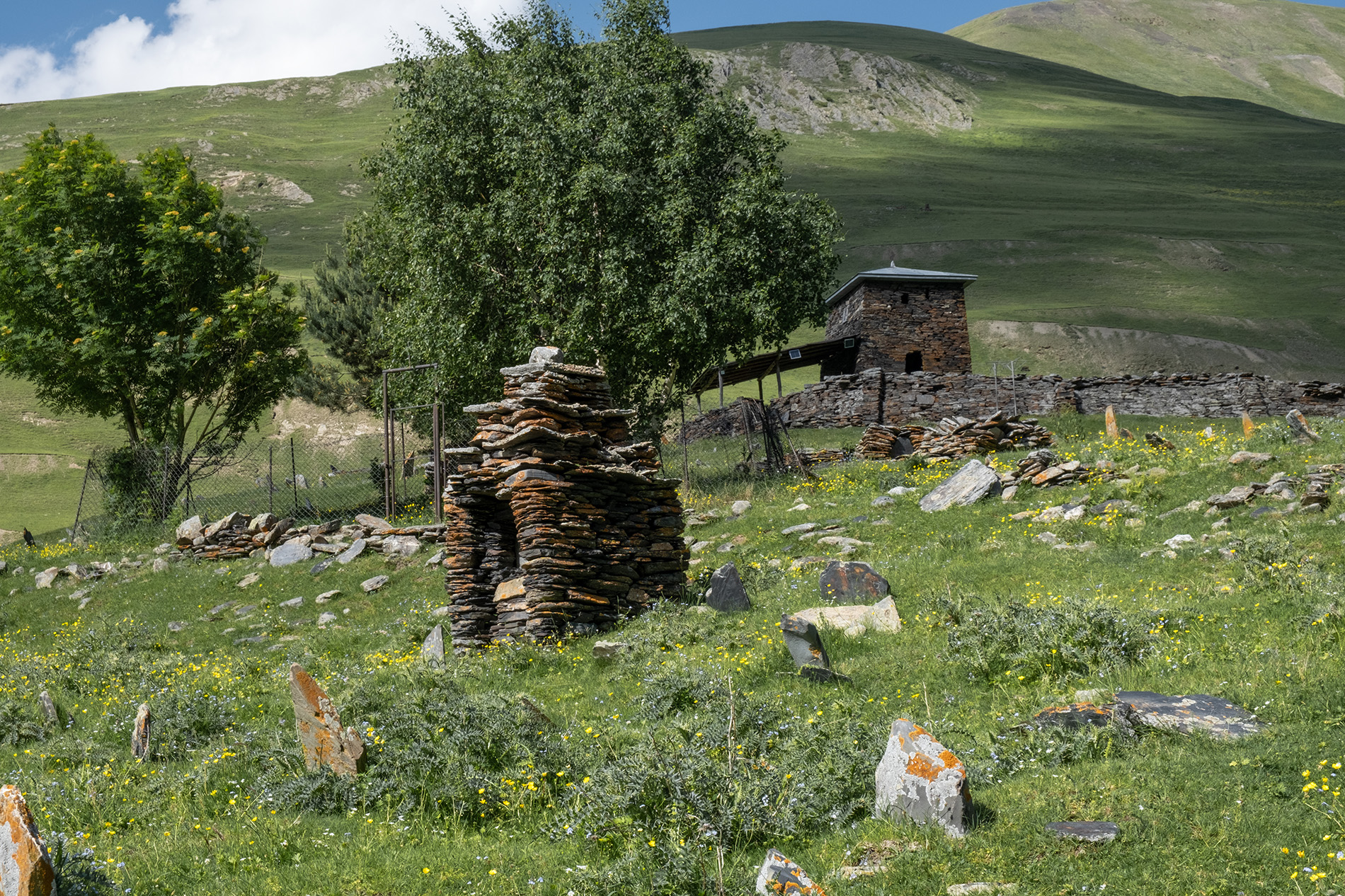
Sacred space in Parsma (Pirikita-Tusheti)
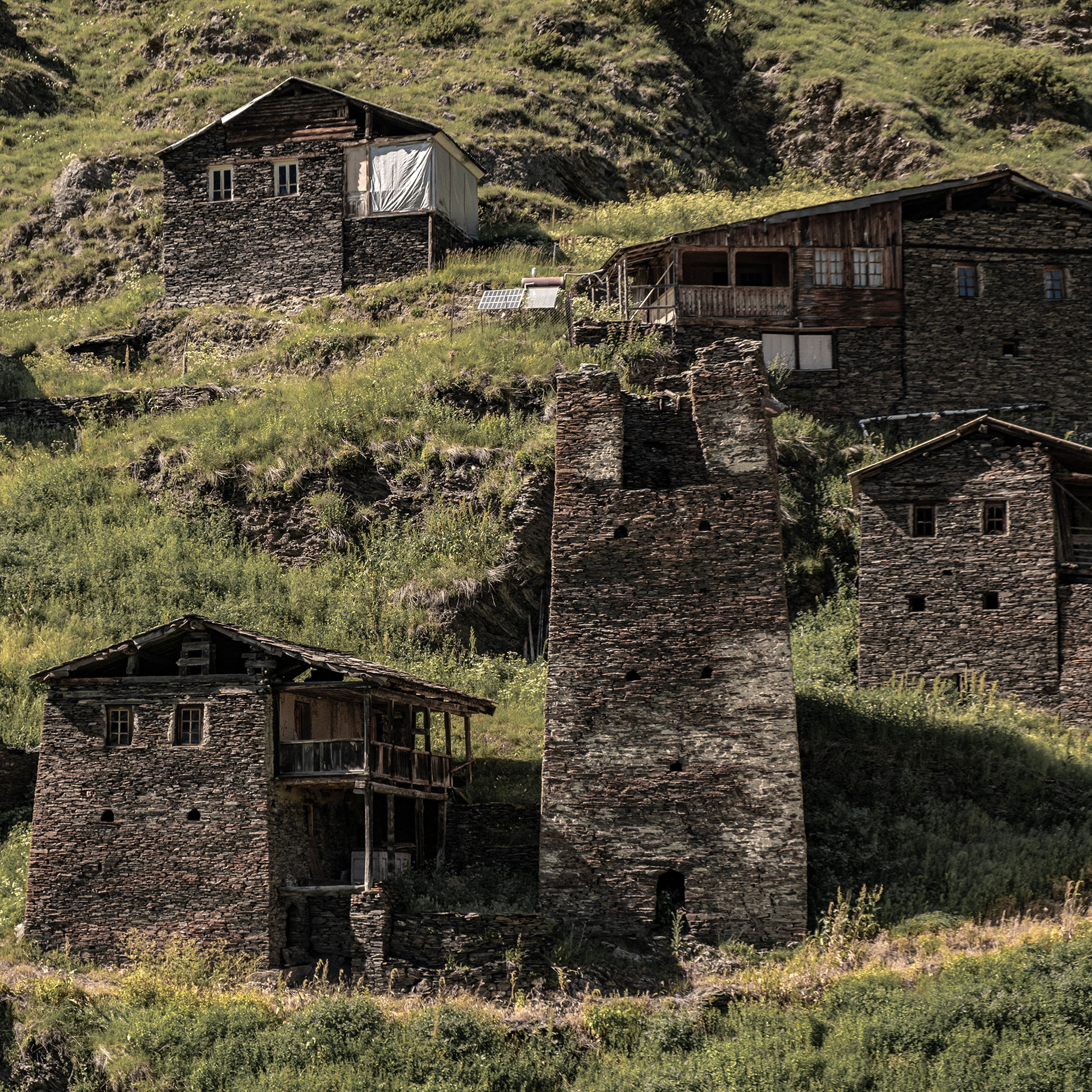
See an article on the description of the architecture of the villages in the high mountain region. The explanations are based on the work of various Georgian anthropologists and architects. The work of Sergi Makalatia (1893-1974), who worked in Tusheti and Chevsuretia in the 1920s and 1930s, takes first place. The architectural drawings in his book on Tusheti, published in 1933, are by Ucha Japaridze, Rene Schmerling, and Dawit Tsitsishvili. Close reference is also made to the work of Longinas Sumbadze (1948-2021), who, based on earlier expeditions to Tusheti in the 1974s, undertook a fundamental survey of the residential buildings and was supported by the photographic and drawing work of his son Nodar Sumbadze. In addition, drawings and sketches were used as the basis for the newly produced illustrations from the survey work ‚Fortified Historical Settlements of Georgia in the Northern Highlands‘, published in 2018 only in Georgian and edited by Irine Elisbarashvili, Manana Suramelashvili, and Tsitsino Zschachkhunashvili; the latter collects older and current graphic representations of the architecture of Tusheti.
Books
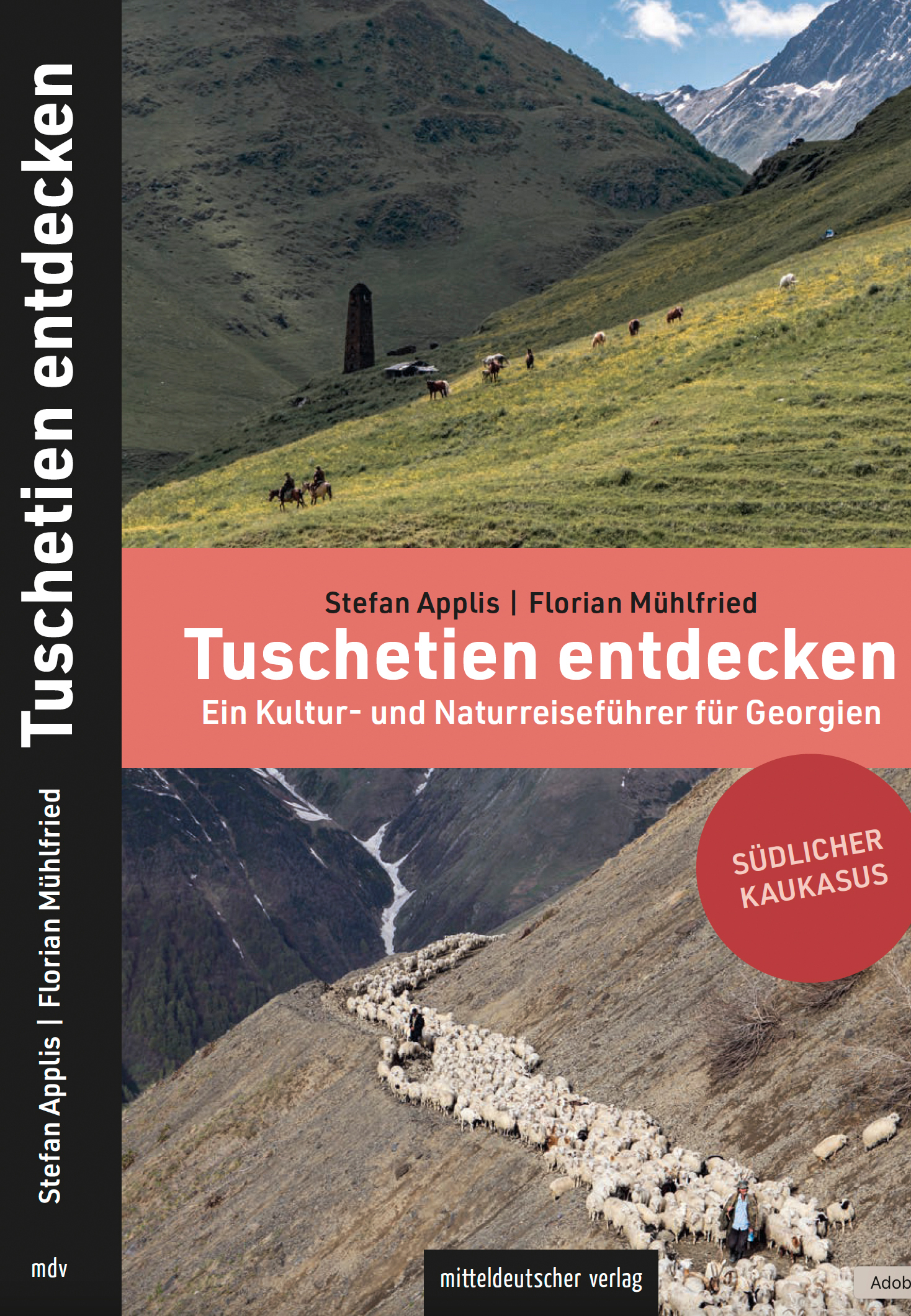
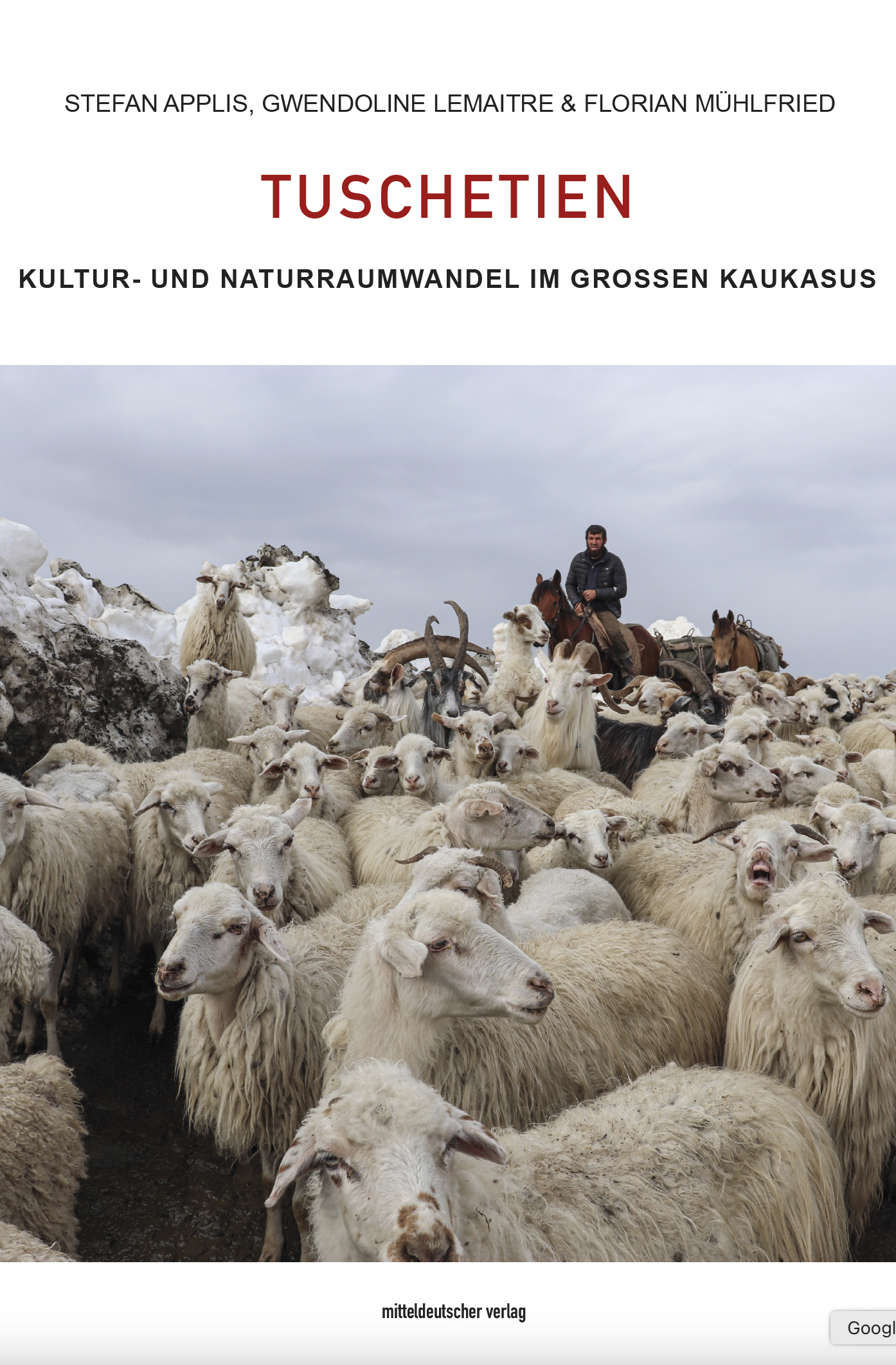
Georgia is becoming increasingly important as a holiday destination, especially for nature enthusiasts looking for high mountain regions. Tusheti, in the north-east of the country and geographically located in the North Caucasus, stands out. The region is known for its unique mountain landscape, the architecture of the mountain villages and cultural traditions that have been preserved for centuries. This illustrated book presents Tusheti as both a cultural and natural region. It takes an in-depth look at topics such as history, architecture, religion, economy, tourism and social practices. Particular emphasis is placed on transhumance, a form of livestock farming with pasture rotation, and its historical significance. Thanks to many years of experience in field research and an extensive archive of photographs, the authors offer well-founded insights into this fascinating region.
(c) Photography: Stefan Applis
(c) Text: Stefan Applis
 Stefan Applis | Photography | Spaces, Places & Practices