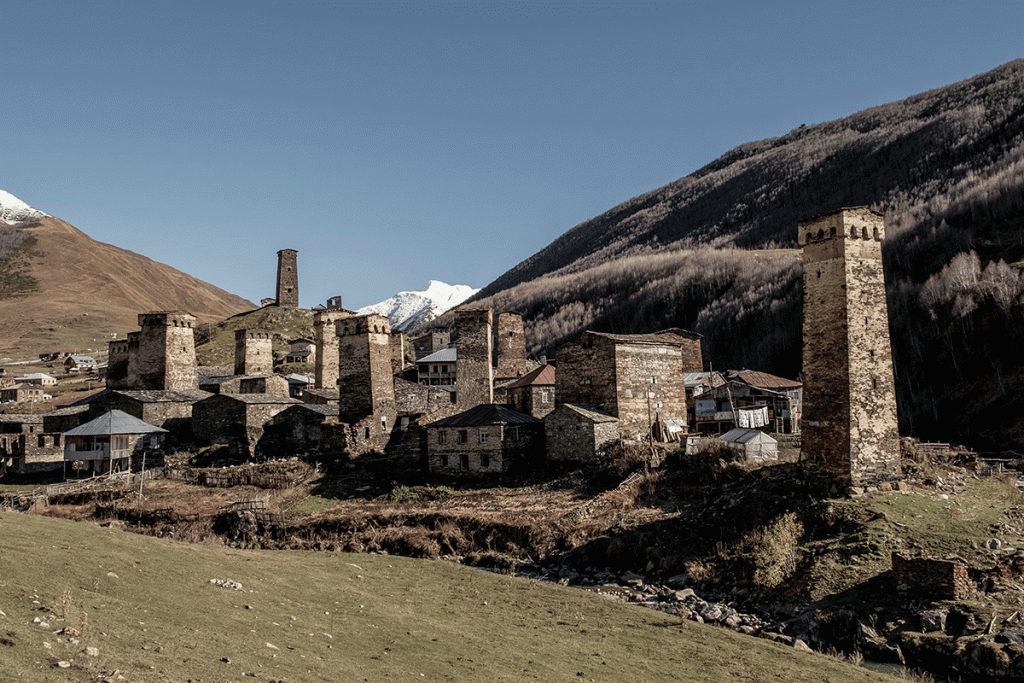
In Svaneti, an entirely new world was to be built during the Soviet era: The Svans were described by Sergey Tretyakov, one of the most prominent art and film theorists of the time, in a text for Pravda, the main newspaper of the Soviet Union, as „Gorge People „(1928). Tretyakov had travelled to Svaneti several times during the period when Moscow headquarters commissioned him to bring Georgian film into line ideologically. In his view, the Svans did not live in a meaningful culture that had developed in its own right. He thought that the Svans led a life like in the early Middle Ages, locked into geographical space. Because of their irrational belief in pagan and Christian customs, they were forced to stay there because they were not allowed to leave their dead. Thus, year after year, the people’s suffering repeated itself, from which only the Soviet power could free them by making them Soviet people. In Tretyakov’s view, the medieval buildings and towers have no value; they only preserved a dusty love of freedom and the musty mould of blood revenge. They are also a constant source of conjunctivitis that was rampant among the Svans.
Tretyakov painted the Soviet future of Svaneti as that of a transformed space where nature was tamed for the benefit of the people. Ores were mined, and sawmills and paper mills took advantage of the abundance of timber. Cable cars negotiated the dangerous gorges; people had access to everything in terms of education. And the landscape resembled that of a paradisiacal spa park where tourists could starve their bacteria and „tarnish their red blood cells „.
The programme that the Soviet power carried out in Svaneti, regardless of how one may ultimately evaluate it, was of enormous scope and entailed tremendous costs. On the one hand, the Sovietisation of Svaneti brought with it an improvement in living conditions. Still, on the other hand, it also demanded a devaluation of centuries-old ideas of life. The establishment of Kolkhozes and Sovkhozes did not initially progress as quickly as Tretyakov might have hoped because of the Second World War and the difficult conditions prevailing on the ground. In Ushguli, for example, the collective farm there was not founded until 1951.
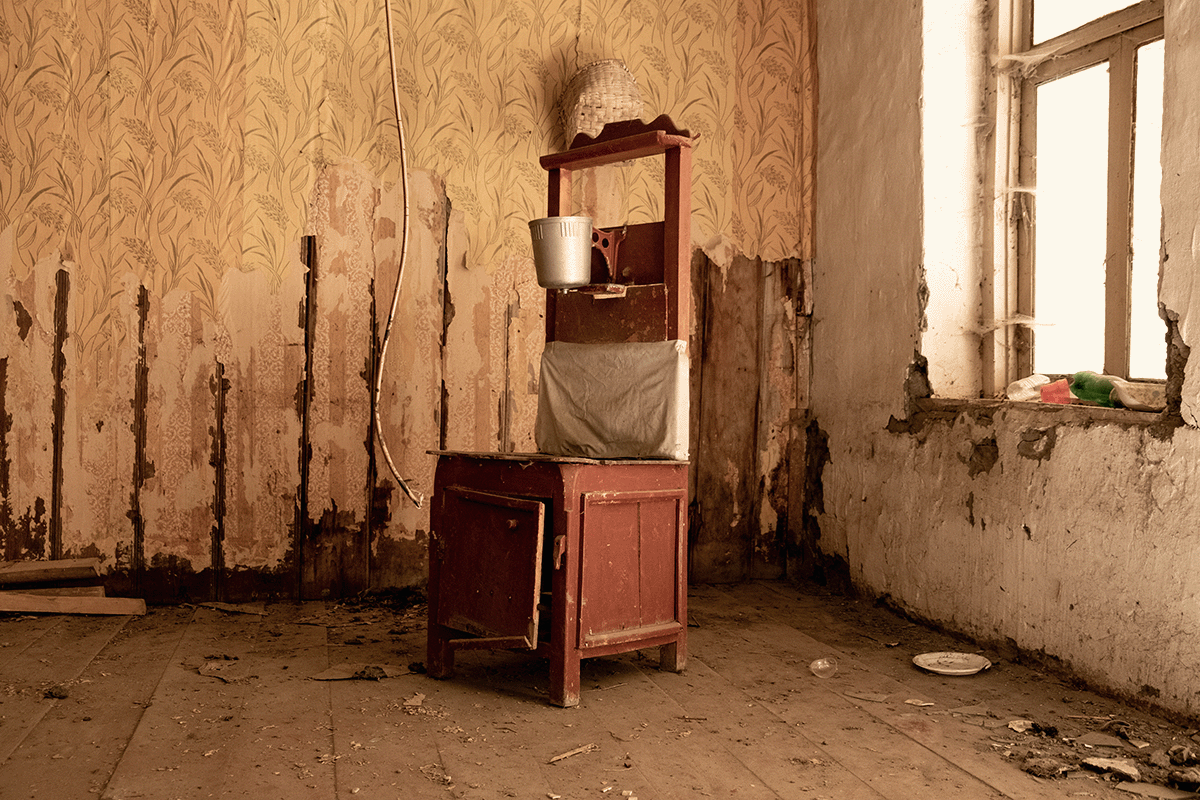
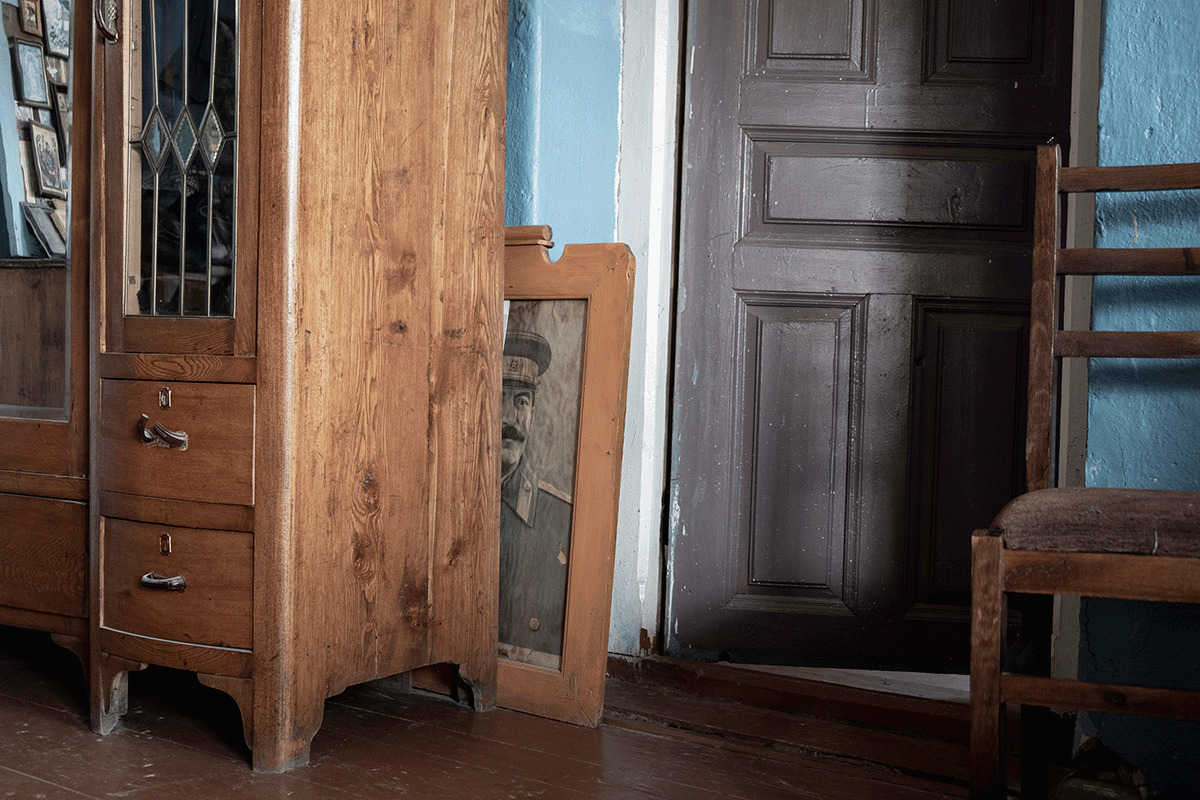
In Svaneti, an entirely new world was to be built during the Soviet era: The Svans were described by Sergey Tretyakov, one of the most prominent art and film theorists of the time, in a text for Pravda, the main newspaper of the Soviet Union, as „Gorge People „(1928). Tretyakov had travelled to Svaneti several times during the period when Moscow headquarters commissioned him to bring Georgian film into line ideologically. In his view, the Svans did not live in a meaningful culture that had developed in its own right. He thought that the Svans led a life like in the early Middle Ages, locked into geographical space. Because of their irrational belief in pagan and Christian customs, they were forced to stay there because they were not allowed to leave their dead. Thus, year after year, the people’s suffering repeated itself, from which only the Soviet power could free them by making them Soviet people. In Tretyakov’s view, the medieval buildings and towers have no value; they only preserved a dusty love of freedom and the musty mould of blood revenge. They are also a constant source of conjunctivitis that was rampant among the Svans.
Tretyakov painted the Soviet future of Svaneti as that of a transformed space where nature was tamed for the benefit of the people. Ores were mined, and sawmills and paper mills took advantage of the abundance of timber. Cable cars negotiated the dangerous gorges; people had access to everything in terms of education. And the landscape resembled that of a paradisiacal spa park where tourists could starve their bacteria and „tarnish their red blood cells „.
The programme that the Soviet power carried out in Svaneti, regardless of how one may ultimately evaluate it, was of enormous scope and entailed tremendous costs. On the one hand, the Sovietisation of Svaneti brought with it an improvement in living conditions. Still, on the other hand, it also demanded a devaluation of centuries-old ideas of life. The establishment of Kolkhozes and Sovkhozes did not initially progress as quickly as Tretyakov might have hoped because of the Second World War and the difficult conditions prevailing on the ground. In Ushguli, for example, the collective farm there was not founded until 1951.
Those who experienced the Soviet era emphasise the differences today: medical care was safe, building materials were cheap, one could work for oneself and one’s family, and a little for the collective. There was always a market for all agricultural products, and transport to the cities was regulated and cheap. There was a shop in every village community for what one did not produce oneself. The children attended secondary schools in the region and learned Georgian, Russian, some English and German. One had been able to study oneself or one’s siblings and found work with the degrees. Today, the situation is much worse, even if working for one’s own and family interests is more in line with the people’s lifeworld in Svaneti.
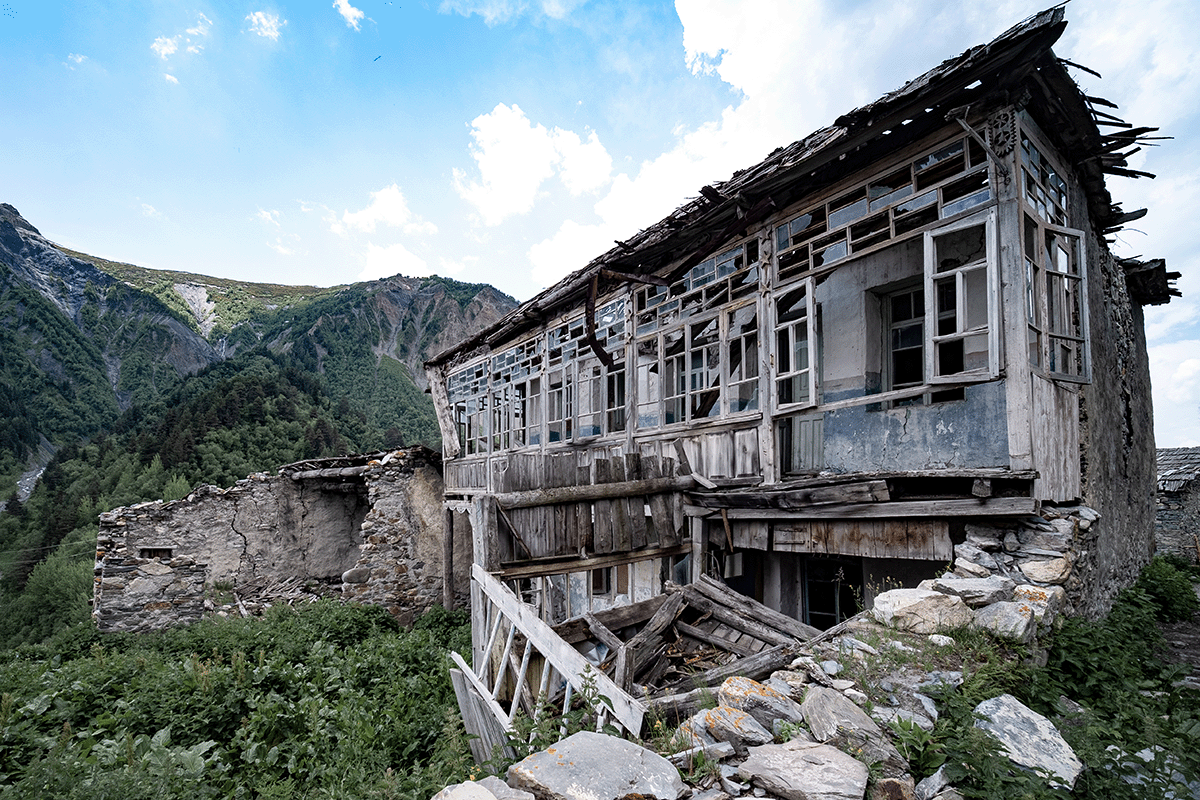
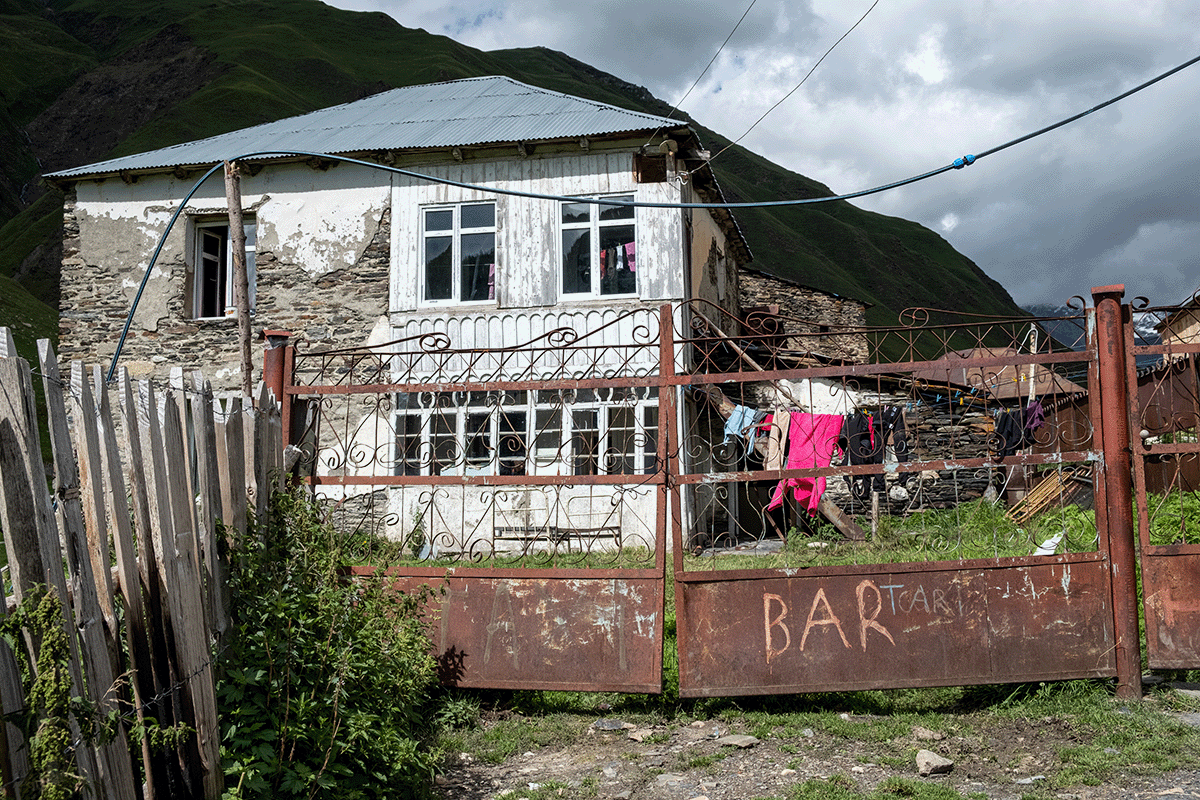
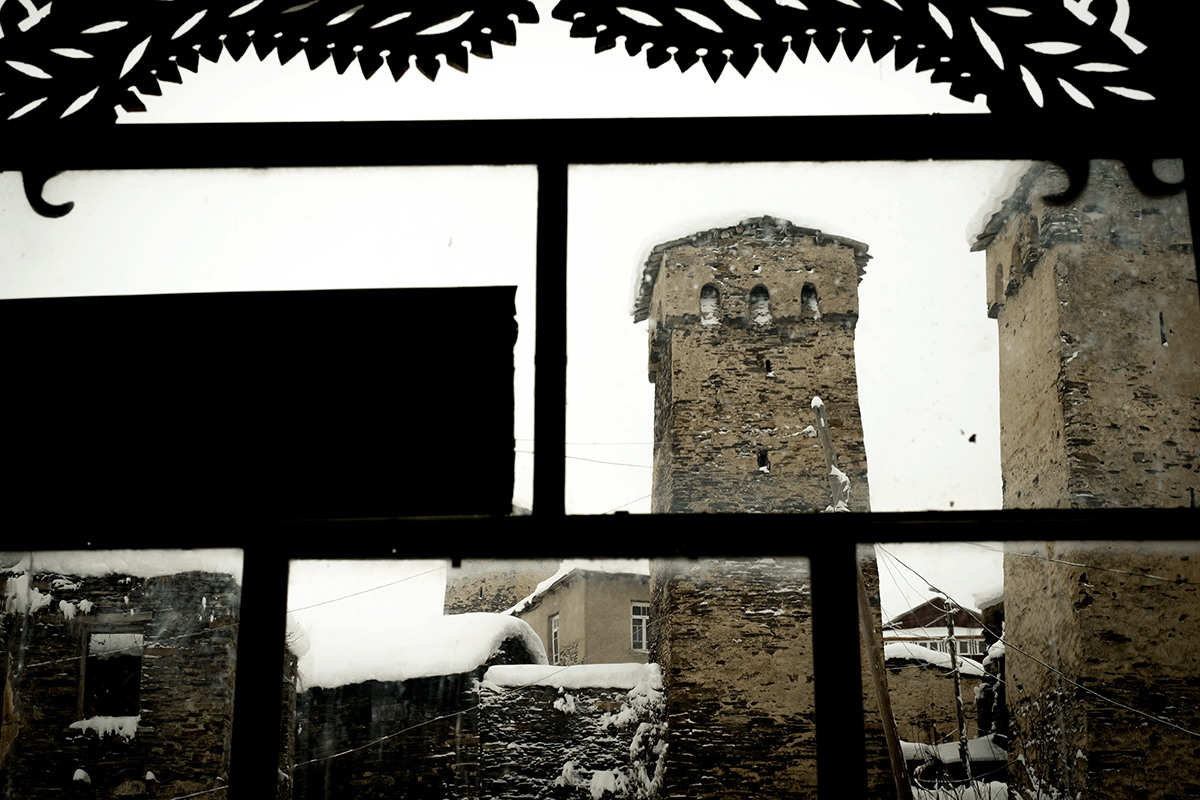
The traditional architecture of the mountain villages of Svaneti had a defensive character, i.e. towers and residential buildings were closed off from the outside. The various buildings were also often designed to lean against each other. They reinforced the defensive character through closable, inward-facing connecting elements such as corridors and shafts. Suppose at least two buildings, consisting of a tower and a residential building, are adjacent to each other. In that case, it is called a Svan fortress. In the village of Chazhashi from the village community of Ushguli, the traditional construction method is still completely preserved in many buildings, which is why the UNESCO Commission granted the village World Heritage status. However, there are also some new buildings or extensions in Chazhashi. These were built during the Soviet era from the 1950s onwards and were primarily intended to improve living conditions. The most important element of the architecture of the Soviet period is the balcony extensions, the construction of which was connected with an increase in the height of the buildings in which people lived. People and animals were separated by extending the first floor: the living quarters moved to the first floor. Where the animals were still housed in the same building, the ground floor became purely stable. Traditional house buildings already knew structural extensions in series, i.e. a new part of the building was added to the existing buildings.
Architecturally, the „Zhareda“ guesthouse represents the prototype of the new Soviet family house in the village community of Ushguli. It was built in 1939 on open land as a new building in the lower area of the village district of Shibiani. All buildings in the 1940s and later followed its basic structure. However, no building after that was designed on such a large scale. This is because the building project had an exemplary character. Its builder was certainly massively supported by the central administration for ideological reasons. Thus, today‘s „Zhareda“ guesthouse also became a model for the later tourist valorisation of residential buildings. It was the only guesthouse in Ushguli until the late 1990s.

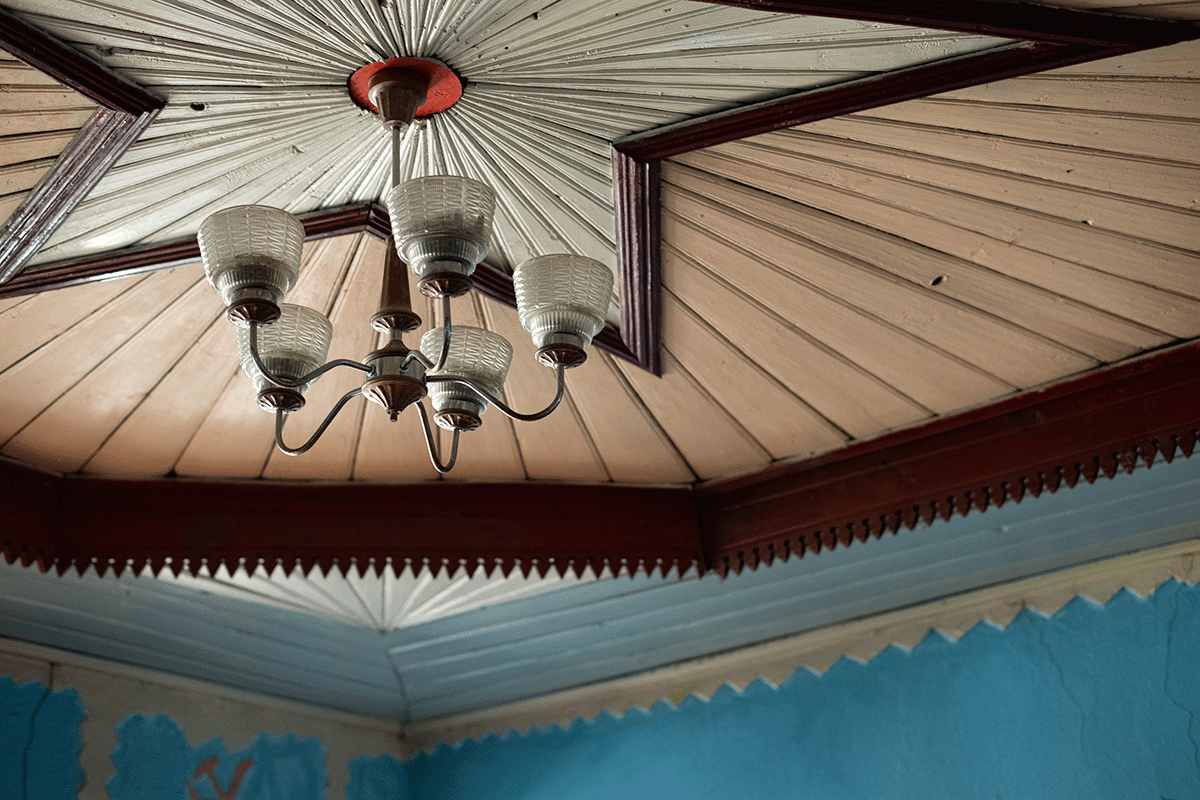
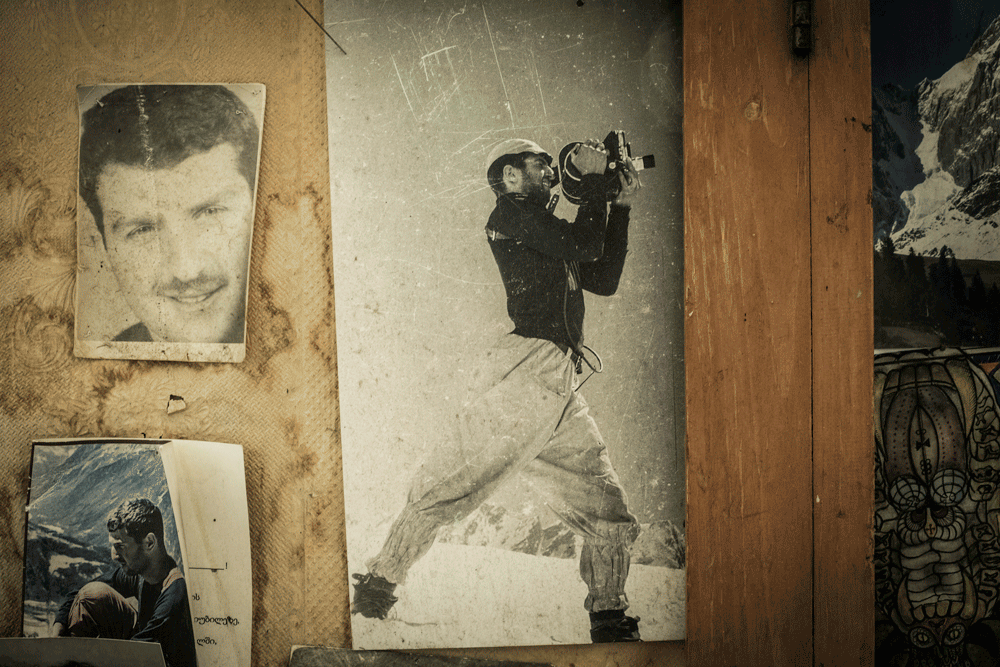
In the Soviet era, all official international guests of Georgia who also visited Svaneti stayed in the present-day „Zhareda“ guesthouse. Within the framework of Stalin‘s undertakings to socialise peripheral regions and transform ethnic-regional identities into Soviet identities, Ushguli represented a selected point of development because of its special historical significance within Georgia. Accordingly, it is not surprising that the construction of the first private residential building was supported. A residential building that provided private family rooms on the ground floor, but a quasi-public representative showroom on the first floor, to which a total of four rooms were connected at the sides, each of which offered space for four to six beds. The new building must have meant a tremendous upheaval for the inhabitants of Uschguli, who came from an architectural background that, for reasons of defence and because of the prevailing climatic conditions, called for an almost windowless construction. From then on, a two-storey residential building was placed in the middle of the village, visible to all from afar, with an almost oversized balcony, which was later fully glazed to the south over the entire area of the first floor and offered space on the ground floor for the placement of long benches and tables for entertaining guests. Since a large number of politicians, scientists, mountaineers and artists who were important in the Soviet era also visited Ushguli on their trips to Georgia, many testimonies of these stays can be found in pictures and objects in a kind of showroom on the first floor of the house, which is today arranged as a museum.

 Stefan Applis | Photography | Spaces, Places & Practices